You open a wedding invitation and see the word “Formal.” You know it means more than your everyday work clothes, but you also know it is not black-tie. Beyond that, you are guessing.
You are not alone. Formal is the most misunderstood wedding dress code because it occupies the widest range on the formality spectrum. A dark suit and a floor-length gown are both correct answers, and so is everything between them depending on the season, venue, and time of day.
If you are staring at a summer or fall 2026 wedding invitation right now, you are not alone. Peak wedding season runs May through October, and formal dress codes are more popular than ever as couples prioritize elevated, personalized celebrations. The good news: once you understand the framework, the decision gets much simpler.
This guide eliminates the guesswork. It covers exactly what formal wedding attire means in 2026 for men and women, with specific outfit recommendations by season, venue type, time of day, body type, and budget. No vague advice. No “just wear something nice.”
Where “Formal” Falls on the Wedding Dress Code Spectrum
Before choosing an outfit, you need to understand what formal is and what it is not. Here is the full spectrum:
| Dress Code | Women | Men |
|---|---|---|
| Casual / Garden Party | Sundress, maxi dress | Chinos, sport coat optional |
| Semi-Formal / Cocktail | Cocktail dress, midi dress | Suit and tie |
| Formal | Elegant cocktail, midi, or floor-length gown | Dark suit or tuxedo |
| Black-Tie Optional | Floor-length gown preferred | Tuxedo strongly preferred |
| Black-Tie | Floor-length gown required | Tuxedo required |
| White Tie | Formal ball gown | Tailcoat, white bow tie |
Formal sits in that productive middle where tuxedos are welcome but not mandatory, and where women have the widest range of acceptable options of any dress code.
Formal vs. Semi-Formal: The Distinction That Trips People Up
The difference between formal and semi-formal wedding attire comes down to intentionality. At a semi-formal wedding, a nice work dress or a standard business suit is appropriate. At a formal wedding, those same outfits will look underdressed.
When a couple writes “formal” on their invitation, they are specifically asking guests to elevate beyond the norm. They chose their venue, their decor, and their aesthetic with a certain level of polish in mind, and your outfit is part of that picture.
The practical test: if you could wear the outfit to a Friday meeting without anyone commenting, it is not formal enough.
Formal Wedding Attire for Men
The real frustration with formal dress codes is not the cost or the effort. It is the uncertainty of not knowing whether you will walk in over- or underdressed. Men’s formal attire has the narrowest acceptable range, which actually makes the decision easier once you understand the framework.
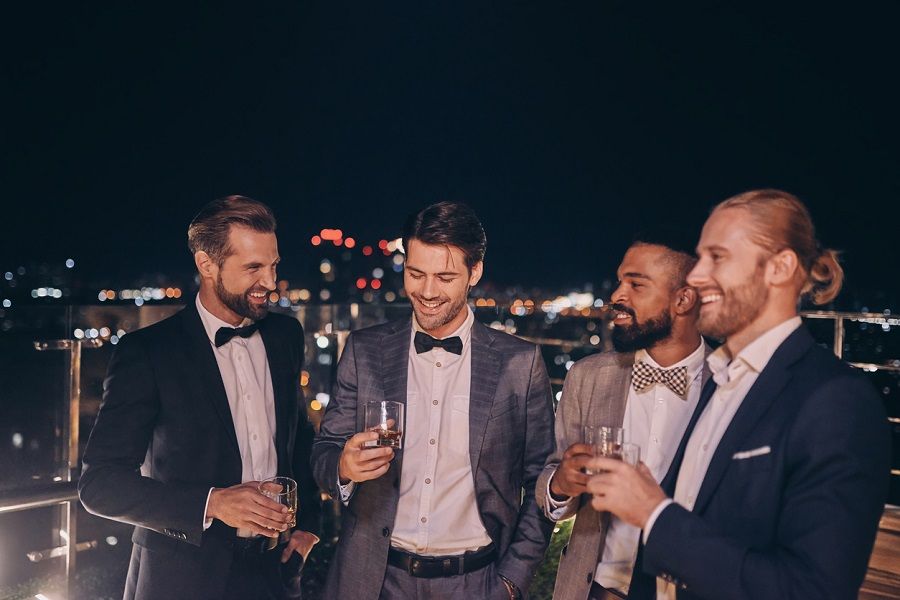
The Core Decision: Suit or Tuxedo
At a formal wedding, both are correct. The choice depends on three factors: time of day, venue formality, and what you already own.
Tuxedo. The right call for evening events in ballrooms, upscale hotels, or city venues. If you own one that fits well, wear it. A tuxedo at a formal wedding is never wrong, but it can feel slightly overdressed at a daytime garden event.
Dark suit. The workhorse of formal men’s attire. A well-tailored navy, charcoal, or black suit with a crisp white dress shirt and a solid dark tie is the single most versatile choice for any formal wedding. If you are the guest who attends four or five weddings every summer, here is what we would actually do: invest in one excellent dark navy suit. It works at every venue, every time of day, and every season with minor accessory swaps.
The three-piece option. Adding a matching vest to a suit instantly elevates it toward formal territory. In 2026, the contrasting waistcoat is a strong trend: a navy suit with a champagne or ivory vest, or charcoal with a burgundy vest. It photographs well and adds personality without risk.
The Details That Separate Formal From Business
- Jacket and trousers must match. No mixing separates at a formal wedding.
- The shirt must be a proper dress shirt: spread or point collar, well-pressed, capable of supporting a tie.
- Shoes should be oxfords, monk straps, or dressy loafers in black or dark brown. No sneakers. No casual boots. No square-toed dress shoes from 2014.
- A tie is expected at most formal weddings. A pocket square adds polish for minimal effort.
- Cufflinks and a quality watch signal that you dressed with intention, not obligation.
Men’s Formal Attire by Season
Fall. Lean into warmth without going costume. A charcoal or navy suit with a burgundy, rust, or forest green tie reads perfectly seasonal. Jewel-toned suits in deep burgundy or forest green work if the cut is clean and the fabric is structured. Avoid khaki or tan entirely in fall.
Winter. This is tuxedo season. An evening winter wedding in a ballroom or city venue calls for a tux with a black necktie (not a bow tie, unless the invitation says black-tie). If you are wearing a suit, go dark: black or charcoal, paired with a deep jewel-toned tie in emerald, sapphire, or wine. Texture matters in winter. Wool-blend suits with a subtle texture look richer than flat-weave summer fabrics under indoor lighting.
Spring. The lightest-colored suit you can wear at a formal wedding and still look appropriate is a medium gray or warm navy. Pair with a light-colored shirt and a tie with subtle pattern: a small floral, a quiet geometric, or a textured solid. Brown shoes work for daytime spring events. Black for evening.
Summer. The challenge is looking formal while surviving the heat. The solution is fabric, not formality reduction. A linen-blend suit in navy or light gray breathes and moves without sacrificing structure. Pair with a simple tie and clean loafers. Never remove your jacket inside the venue at a formal wedding, even in July. If you need to cool down, step outside.
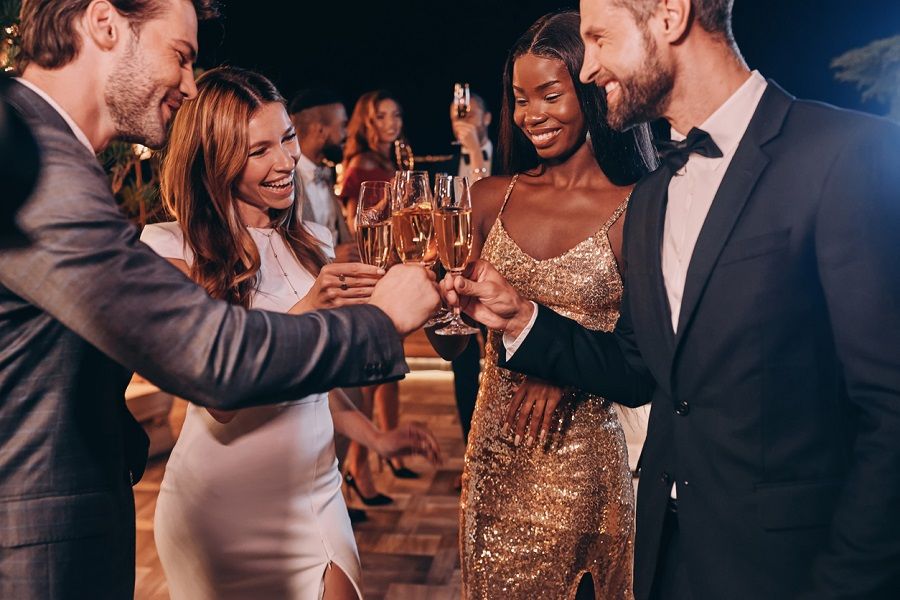
Men’s Formal Attire by Body Type
Tall and slim. Double-breasted suits and peak lapels create visual width that balances a longer frame. Avoid overly slim ties that emphasize height. A wider lapel and a standard-width tie create proportion.
Broad or muscular. Single-breasted, two-button suits with a notch lapel keep lines clean. Make sure the jacket closes without pulling across the chest, and the shoulders hit exactly at your natural shoulder line. A slightly longer jacket length creates a balanced silhouette.
Shorter stature. A well-tailored slim-fit suit with a higher button stance elongates the torso. Avoid cuffs on your trousers: a clean hem creates an unbroken vertical line. Monochromatic combinations (navy suit, navy tie, darker shirt) also create a lengthening effect.
Carrying extra weight. A structured jacket with natural shoulders and a single rear vent skims rather than clings. Dark colors and matte fabrics are your allies. Make sure the jacket is long enough to cover your seat, and avoid anything too tight through the midsection. Comfort and clean lines matter more than trendy cuts.
Formal Wedding Attire for Women
Women have significantly more range at a formal wedding than men, which creates both freedom and decision paralysis. If you are the person who has opened 37 tabs of dresses and still cannot commit, that is completely normal. The guiding principle: elegant, intentional, and occasion-appropriate.
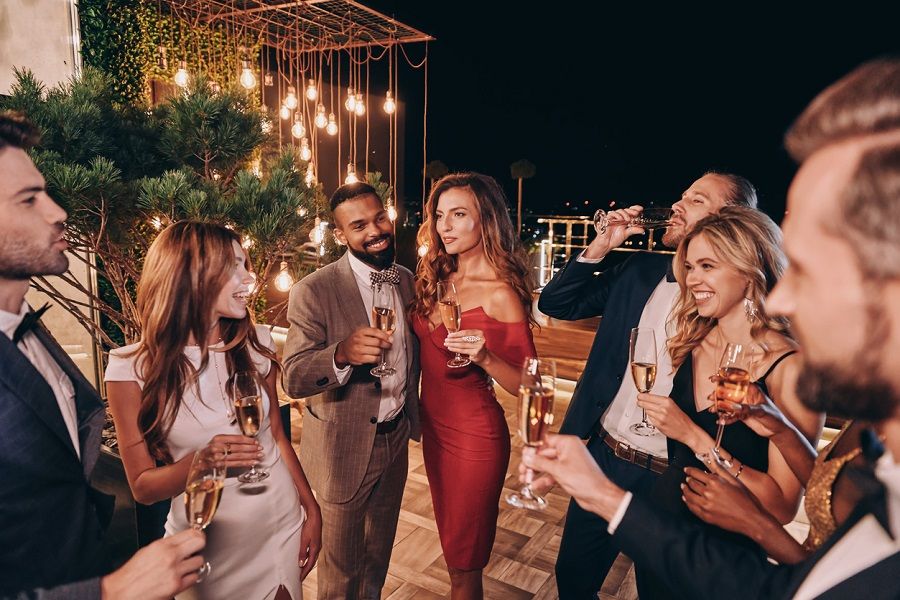
Length and Silhouette Guide
| Length | Formality Level | Best For |
|---|---|---|
| Knee-length cocktail | Lower end of formal | Daytime, outdoor, summer |
| Midi (calf to ankle) | Mid-range formal | Most formal settings, year-round |
| Floor-length gown | High formal | Evening, ballroom, winter |
| Tailored jumpsuit | Accepted formal alternative | Any formal setting if styled up |
The shorter the dress, the more your shoes, jewelry, hair, and accessories need to compensate. A knee-length cocktail dress at a formal wedding requires statement earrings, polished heels, and a structured clutch to read “formal event” rather than “nice dinner.”
2026 Color and Fabric Trends
This year’s color palette for formal wedding guests leans rich and earthy. The Pantone-influenced tones showing up across bridal fashion: sage green, terracotta, burgundy, deep sapphire blue, and butter yellow. These colors photograph well across skin tones and pair naturally with both gold and silver accessories.
Fabrics that read formal: Silk, satin, crepe, velvet (fall and winter), structured linen blends (summer). These fabrics hold their shape, catch light intentionally, and signal that you dressed for an occasion.
Fabrics to avoid: Jersey (reads casual regardless of cut), unstructured cotton, denim, anything sheer without a lining.
The 2026 silhouette shift: Asymmetric necklines (especially one-shoulder), architectural sleeves (three-quarter length and sheer bishop sleeves), and high necklines with open backs are replacing the strapless and deep-V dominance of recent years.
Colors to Avoid at Any Formal Wedding
White, ivory, cream, pale blush, off-white, and very light gold are bridal territory. Wearing any of these is the single most recognized faux pas in wedding guest attire, regardless of the dress code.
The test: hold your outfit next to a white sheet of paper. If it reads similar in tone, choose something else. This applies to patterns, too. A dress that is technically floral but reads as a white dress from ten feet away will photograph as white.
Shoes and Accessories
Heels are not required for formal. What matters is that your shoes look intentional and occasion-appropriate.
- Strappy heeled sandals work for warm weather and evening events
- Block heels or wedges are practical for outdoor venues without sacrificing formality
- Pointed-toe flats in metallic, satin, or patent leather read formal if the rest of your outfit is elevated
- Carry a clutch rather than a shoulder bag. A structured metallic or jewel-toned clutch completes a formal look
- Choose one statement accessory: bold earrings or a necklace, not both competing for attention
Women’s Formal Attire by Season
Fall. The richest season for formal dressing. A midi-length silk or satin dress in emerald, burgundy, navy, or rust with a fitted bodice and flowing skirt is near-perfect. A knee-length lace dress in a deep jewel tone also works if paired with polished heels, an updo, and a light wrap for unpredictable weather.
Winter. Floor-length gowns come into their own here. Deep tones (navy, black, emerald, wine) in velvet or heavy satin are ideal for evening. Layer strategically: a sleeveless dress with a structured wrap or tailored blazer handles cocktail hour without sacrificing the look. Subtle metallics belong in winter. A silver or champagne-gold gown, or metallic shoes against a solid-colored dress, catches candlelight beautifully.
Spring. The most forgiving season. A solid midi dress in dusty rose, soft lavender, sage green, or powder blue reads elegant without trying too hard. Satin is an excellent spring choice because it photographs well, holds its shape, and pairs naturally with a light jacket for changeable weather. Floral prints work if they are subtle and the dress is formal in silhouette.
Summer. Stay elegant in the heat by choosing structured fabrics in lighter weights. A floor-length chiffon dress in a light color risks reading like a bridesmaid dress, so make it distinctly yours with statement jewelry, an interesting neckline, or a thigh slit. A structured cocktail dress in a bold color elevated with clean heels and a polished clutch often hits the formal mark more reliably than a flowing gown in summer.
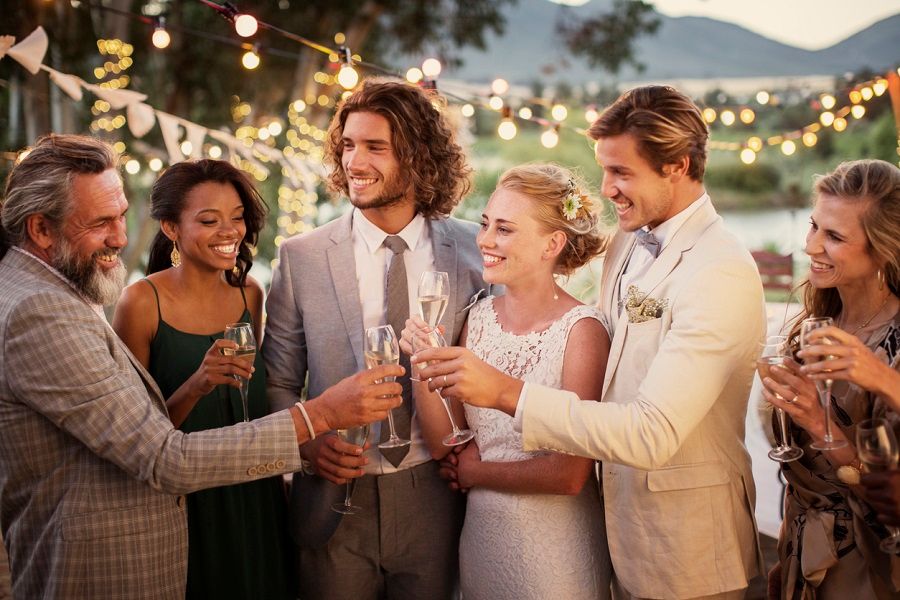
Women’s Formal Attire by Body Type
Pear shape (wider hips, narrower shoulders). A-line and fit-and-flare silhouettes balance your proportions naturally. Look for details that draw the eye upward: statement necklines, structured shoulders, or bold earrings. Avoid bias-cut or bodycon styles that cling through the hip.
Apple shape (fuller midsection). Empire waist and wrap dresses create a defined waistline at the narrowest point of your torso. Structured fabrics (crepe, satin) skim rather than cling. A V-neckline elongates the torso and creates a vertical line that draws the eye up.
Hourglass (balanced bust and hips, defined waist). Fitted-waist dresses and wrap styles highlight your natural proportions. Avoid shapeless or boxy cuts that obscure your waistline.
Tall and slim. Floor-length gowns are your natural advantage. Look for dresses with volume (full skirts, dramatic sleeves, or textured fabrics) to create visual interest. Column dresses and sleek silhouettes also work beautifully on taller frames.
Petite. Midi dresses in a column or A-line silhouette create the most flattering line. Avoid overwhelming your frame with too much fabric, overly wide skirts, or very long hemlines that pool on the floor. High-waisted cuts and monochromatic outfits create a lengthening effect.
Formal Wedding Attire by Time of Day
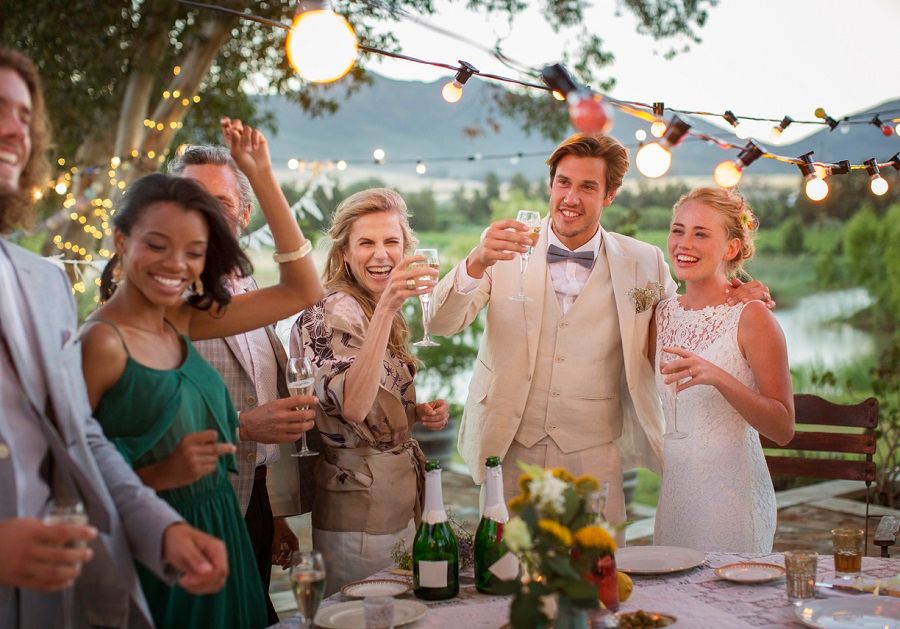
Daytime Formal (Before 5 PM)
Daytime formal allows slightly lighter tones, more color, and a touch more personality.
- Men: Lighter suits (medium gray, warm navy) work alongside dark suits. A printed tie and pocket square add daytime energy. Brown shoes are appropriate.
- Women: Midi or knee-length dresses in pastels, prints, or bright solids. Open-toe shoes are fine. Accessories can be slightly more playful than evening.
- The venue still matters: a daytime ballroom wedding reads more elevated than a garden luncheon at the same hour.
Evening Formal (After 5 PM)
Evening formal pushes toward the black-tie-optional end of the spectrum. When uncertain, go more elevated.
- Men: Tuxedos are entirely appropriate. Dark suits in charcoal or black should be styled sharply with a solid tie, cufflinks, and polished black shoes.
- Women: Floor-length gowns are ideal. If wearing a cocktail-length dress, choose a dark color and style with elevated accessories: an evening clutch, strappy heels, and refined jewelry.
- A ballroom or hotel setting calls for more elevation than an outdoor tent, even after dark.
Formal Wedding Attire by Venue Type
Ballroom or Upscale Hotel
The most elevated formal setting. Default toward the black-tie-optional end.
- Women: Floor-length gowns are ideal. Midis in heavy fabrics (satin, silk, velvet) work if styled up.
- Men: Tuxedos are appropriate. Dark suits should be your sharpest with a tie and pocket square.
City Restaurant or Private Club
Urban settings call for sleek, architectural looks.
- Women: A well-cut cocktail dress or midi in a solid color, styled with statement jewelry and clean footwear.
- Men: Dark suit, white shirt, solid tie, oxfords. Clean and classic.
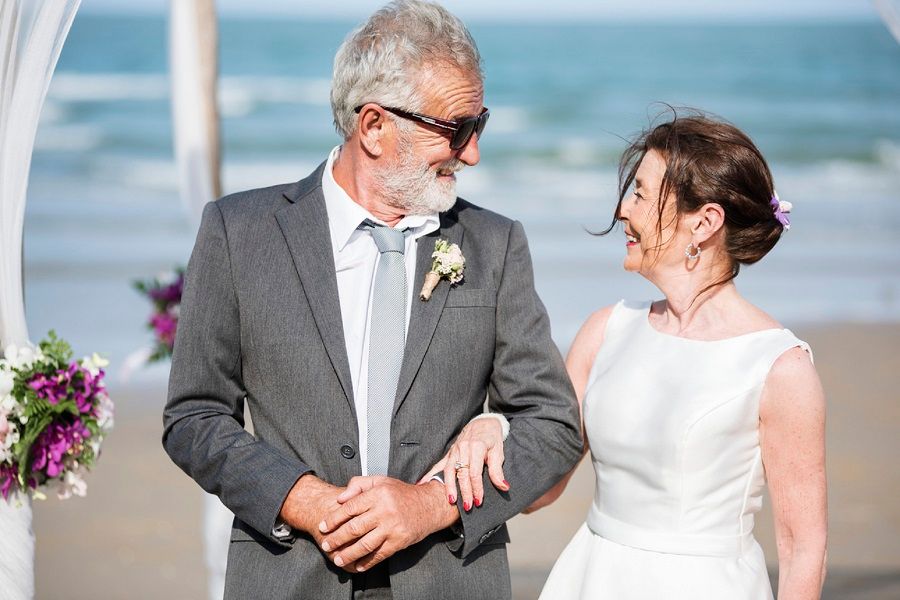
Beach or Waterfront
Beach formal is the most relaxed version of formal attire. The venue softens expectations.
- Women: Midi or floor-length dresses in light colors or subtle prints. Dressy flat sandals work here. Block heels are more practical than stilettos on sand.
- Men: A linen suit with a tie, or a light blazer with well-fitted trousers and a button-down. Sockless loafers are appropriate.
Garden or Estate
Garden weddings allow the most creativity within formal parameters.
- Women: Floor-length or midi dresses in silk, satin, or chiffon. Wedge heels or block heels handle grass better than stilettos. Solid colors read most formally.
- Men: A navy or charcoal suit with a floral pocket square and solid tie. Oxfords with lower heels work better outdoors.
Formal Wedding Attire on a Budget
You do not need to spend $500 to look formal. Here is what matters at each price tier.
Under $100. Focus on fit and fabric. A solid-colored midi dress in a structured fabric from a fast-fashion brand can look excellent if it fits well and you accessorize intentionally. For men, a dark suit that fits properly (even from a budget retailer) with a crisp white shirt and a solid tie beats an expensive suit that does not fit.
$100 to $250. This range opens up department store options, rental services, and mid-tier brands. Men can find a quality suit or rent a tuxedo. Women have access to better fabrics and construction.
$250 and up. Investment-level. A well-made suit or dress at this price point can serve you at multiple weddings and formal events for years.
The rental option. Tuxedo rentals run $150 to $300 and eliminate the storage question. Dress rental services offer designer gowns for a fraction of retail. If you attend formal events infrequently, renting is the financially smart choice. When you get the budget decision right, you look polished without the financial hangover, and that confidence shows in every photograph.
Etiquette Rules That Always Apply
Regardless of season, venue, or budget, a few rules hold universally at formal weddings.
Never wear white or near-white. This is the one rule every wedding guest knows, and it exists for a reason.
Do not outshine the wedding party. A floor-length ball gown, an extremely theatrical outfit, or a very flashy ensemble draws attention away from the couple. The goal is polished and appropriate, not memorable for the wrong reasons.
Commit to the dress code. Formal means formal. Showing up in jeans, a casual sundress, or standard work clothes signals that you did not take the couple’s request seriously.
When in doubt, dress up. It is always better to be slightly overdressed than visibly underdressed at someone’s wedding. Nobody has ever regretted wearing too nice an outfit to a formal event. When you nail your outfit, you spend the entire evening enjoying the celebration instead of tugging at something that does not feel right.
Check the wedding website. Many couples include dress code specifics, venue notes, or practical guidance (no stilettos on historic wood floors, specific color requests). It takes 60 seconds and prevents mistakes.
Real Scenarios
You got the invite two weeks ago and the wedding is this Saturday. Skip the browsing spiral. For women: a solid-colored midi dress in a jewel tone, heels, and a clutch. For men: your darkest suit, a white shirt, and a solid tie. Done in one shopping trip or one rental order.
You are attending a formal beach wedding and have no idea what that means. Beach softens the rules but does not erase them. A linen suit with a tie for men. A midi or maxi dress in a lighter color with block heels or dressy flats for women. Leave the stilettos at home.
You are plus-size and every “formal wedding” guide shows the same body type. Focus on structured fabrics (crepe, satin) that skim rather than cling, and prioritize fit at the shoulders and waist. A-line silhouettes, wrap dresses, and empire waists all work beautifully. Your outfit should make you feel powerful, not restricted.
You want to re-wear something you already own but are not sure it is formal enough. Apply the Friday meeting test: if you could wear it to work without anyone commenting, it needs elevation. Add a statement necklace, swap to dressier shoes, or carry a metallic clutch. Small upgrades can push a borderline outfit into formal territory.
Final Checklist Before You Walk Out the Door
- Does the outfit avoid white, cream, ivory, or pale bridal tones?
- Are the fabrics event-quality rather than everyday?
- Do your shoes and accessories elevate the look?
- Does the overall outfit feel special-occasion, not office-appropriate?
- Would you feel confident standing next to the wedding party in photographs?
- Is it appropriate for the season, venue, and time of day?
Formal wedding attire comes down to showing up looking like the event mattered to you. The couple chose this dress code because they are creating something elevated, and your outfit is part of that picture. A little thought and the right choices go a long way.